

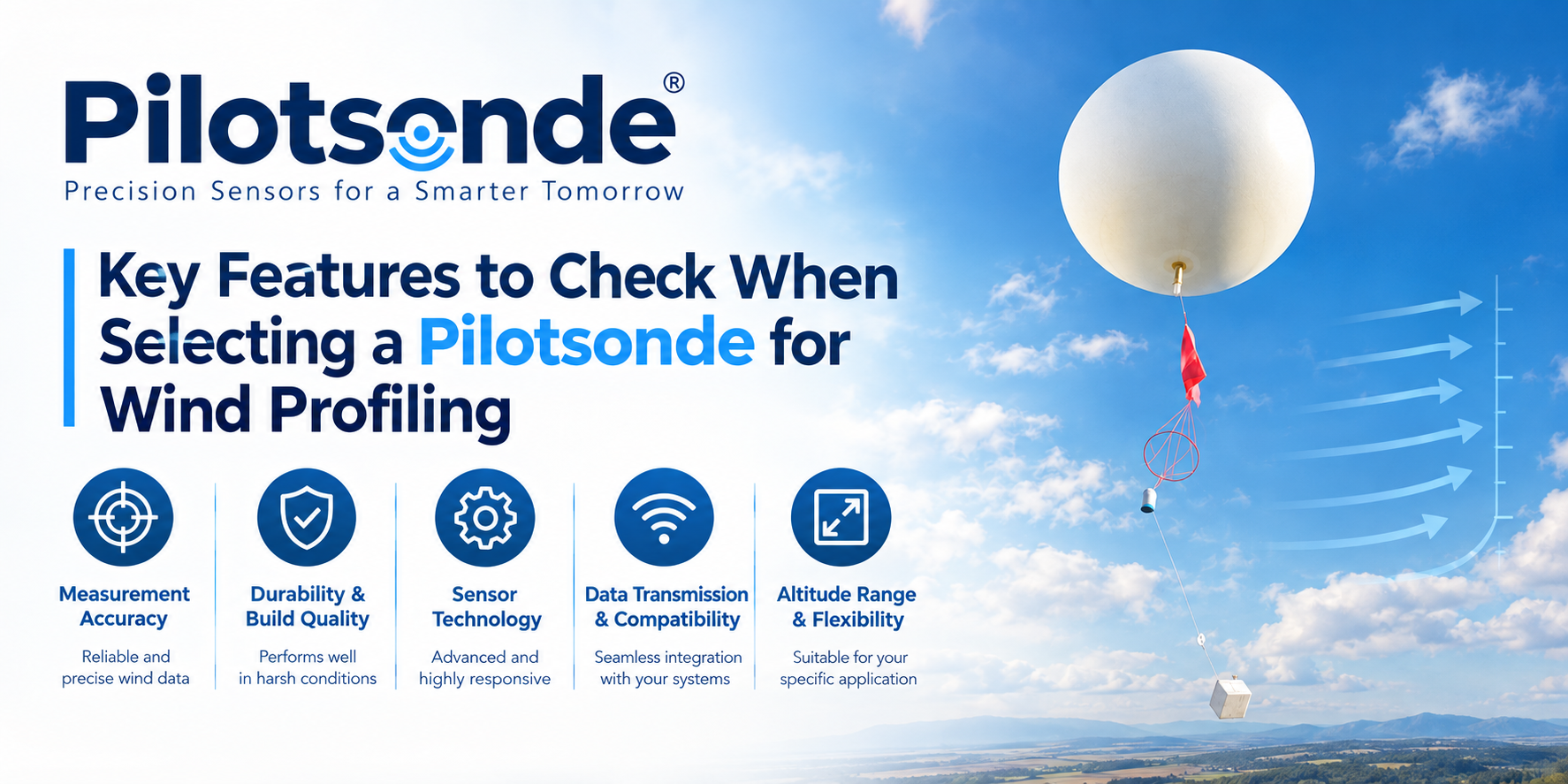
Key Features to Check When Selecting a Pilotsonde for Wind Profiling
Upper air wind measurement is a crucial aspect that is of importance in fields such as meteorology, aviation meteorology, and scientific meteorology. To measure meteorological wind at various altitudes, meteorologists use a device called a Pilotsonde that is fixed to a weather balloon. When it comes to selecting Pilotsonde sensor manufacturers, several important factors should be taken into consideration, including tracking technology, measuring abilities, data transfer methods, and interoperability with other meteorological instruments. What is Pilotsonde? A pilotsonde is an upper-air meteorological instrument that is carried by a weather balloon to measure upper air wind. A pilotsonde has GPS tracking technology to find the weather balloon, and all that is left is for the sensors to take care of computing wind speed and direction at various altitude levels. The data obtained is useful for meteorologists in their understanding of wind circulation changes. How To Choose a Pilotsonde Like an Expert GPS-Based Tracking Technology GPS technology is useful for locating the balloon throughout its rise. With this technology, meteorologists find out both the position of the balloon and the wind conditions at different heights. When comparing products, be sure to check for good tracking capabilities and compatibility with your receiving system. Wind Speed and Direction Measurement These parameters are used by meteorologists to learn about atmospheric circulation and to identify changes in winds. Make sure to buy an instrument that gives you the wind parameters needed for your observation. Atmospheric Pressure Measurement Atmospheric pressure decreases with increasing altitude and gives valuable information about weather conditions during the ascent. Find out if the Pilotsonde measures pressure and whether these measurements fit your data collection requirements. Reliable Digital Data Transmission The pilotsonde sends data to the ground equipment for processing. You need to know its frequency, transmission features, and compatibility with the receiver. The error detection and correction systems make the received data more reliable. Assessing Pilotsonde Sensor Manufacturer While choosing pilotsonde sensor manufacturers, it is essential to check the published technical specifications thoroughly. This includes measurement specifications, frequency range, power consumption, and operational duration. The detailed documentation has all the information needed to know whether the sensor meets their electrical, technical, and operational needs. Compatibility With Existing Equipment Pilotsonde sensors are a part of a broader meteorological monitoring system. It is crucial to ensure that the sensor operating frequency and data output are compatible with the existing receiving equipment. Checking these specifications beforehand will help to avoid problems when integrating the device. SS PILOT 01 Pilotsonde for Upper-Air Observations The SS PILOT 01 Pilotsonde has been introduced by SS Micro Electronics for its meteorological uses. Descriptions say that this product uses a GPS system for tracking and at the same time offers wind speed measurement, wind direction measurement, atmospheric pressure measurement, digital data transfer, etc. This device operates within the frequency band of 400-406 MHz for up to two hours in the air thanks to a dry cell battery. Conclusion The choice of a pilotsonde should be based on careful assessment of the tracking technology, wind measurement, pressure measurement, reliability of transmission, and compatibility of equipment. For buyers searching for pilotsonde sensor manufacturers, you can consider SS Micro Electronics’ SS PILOT 01 Pilotsonde with unique features like GPS tracking and remote transmission of data.
